


- Industries
- Pharma & Nutraceuticals
- Focus topics
Microcrystalline Cellulose (MCC): A Key Excipient for High-Performance Pharmaceutical Formulations

In the development of modern solid dosage forms, excipient functionality plays a decisive role in ensuring consistent manufacturing, product stability, and reliable drug release. Among the most widely used pharmaceutical excipients, microcrystalline cellulose (MCC) stands out for its exceptional versatility and performance. Used in tablets, capsules, and various oral dosage forms, MCC has become a cornerstone material for pharmaceutical manufacturers seeking efficient processing and high-quality formulations.
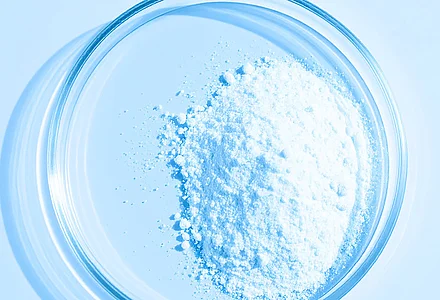
Microcrystalline cellulose is a purified, partially depolymerized cellulose derived from natural plant fibers, typically obtained through controlled acid hydrolysis of α-cellulose. This process removes the amorphous regions of cellulose, leaving behind highly crystalline particles with excellent structural properties. The resulting material is a fine, white, odorless powder characterized by high purity, chemical stability, and biocompatibility—attributes that make it ideal for pharmaceutical applications.
Multifunctionality in Pharmaceutical Formulation:
One of the main reasons for the widespread adoption of MCC in the pharmaceutical industry is its multifunctional role as an excipient. In tablet formulations, MCC can simultaneously act as a binder, filler, disintegrant, and flow aid, reducing the need for multiple additives and simplifying formulation design.
As a binder, MCC provides strong internal cohesion during compression. Its particles deform plastically under pressure and form hydrogen bonds, producing tablets with excellent mechanical strength and low friability. This ensures the integrity of the dosage form during manufacturing, packaging, transport, and storage.
In addition to its binding capabilities, MCC functions as an efficient disintegrant. Due to its porous structure and high water absorption capacity, MCC rapidly wicks moisture into the tablet matrix once ingested. This swelling effect disrupts the tablet structure and promotes fast disintegration, facilitating the release and dissolution of the active pharmaceutical ingredient (API).
The material also serves as a diluent or filler, particularly valuable in formulations containing low-dose APIs where bulk volume is required to achieve proper tablet size and uniformity. At the same time, its excellent flow properties ensure consistent die filling and uniform tablet weight during large-scale production.
Optimized for Direct Compression Processes
In modern pharmaceutical manufacturing, efficiency and process robustness are essential. MCC is widely recognized as one of the most effective excipients for direct compression, a preferred tableting method that eliminates the need for wet granulation.
Thanks to its superior compressibility and flowability, MCC enables formulators to produce strong, uniform tablets with fewer processing steps. This not only simplifies manufacturing but also reduces production costs, energy consumption, and batch variability.

Compatibility and Stability
Another critical advantage of microcrystalline cellulose is its chemical inertness and compatibility with a broad range of active ingredients. MCC does not react with most APIs, helping maintain the stability and efficacy of pharmaceutical products throughout their shelf life.
Its inert nature also supports formulation flexibility, allowing it to be used in a wide variety of dosage forms—from immediate-release tablets to controlled-release systems.
A Reliable Choice for Pharmaceutical Manufacturers
For pharmaceutical companies seeking reliable excipients that combine performance, versatility, and manufacturing efficiency, microcrystalline cellulose remains one of the most trusted materials in the industry. Its unique combination of compressibility, flowability, disintegration properties, and chemical stability makes it indispensable in the design of modern oral dosage forms.
High-quality MCC grades are engineered to meet the demanding requirements of pharmaceutical production, delivering consistent particle characteristics and reproducible performance in tablet and capsule formulations.
In an industry where formulation efficiency and product quality are paramount, microcrystalline cellulose continues to be a benchmark excipient, enabling manufacturers to develop robust, high-performance pharmaceutical products with confidence.
Scientific bibliography
1. Thoorens, G., Krier, F., Leclercq, B., Carlin, B., Evrard, B. (2014). Microcrystalline cellulose, a direct compression binder in a quality by design environment—A review. International Journal of Pharmaceutics.
2. Chaerunisaa, A. Y., et al. (2019). Microcrystalline Cellulose as Pharmaceutical Excipient. In: Pharmaceutical Manufacturing Handbook. IntechOpen.
3. Zhao, H., et al. (2022). An update on microcrystalline cellulose in direct compression. Carbohydrate Polymers.
4. Saigal, N., et al. Microcrystalline Cellulose as a Versatile Excipient in Drug Formulation. Journal of Young Pharmacists.
5. Haruna, F., et al. (2020). Compaction and tableting properties of composite particles of microcrystalline cellulose engineered for direct compression. Future Journal of Pharmaceutical Sciences.


